SEO case study · Replatform & rebrand · Wasabi
A new site that keeps the old traffic.
Wasabi’s cloud storage had outgrown its website. The rebrand needed a site that looked as sophisticated as the product, without giving up the search traffic the old one had already earned.
- Client
- Wasabi Technologies, via Amdocs Studios
- Role
- Content Strategist
- Launch
- November 2024
- Scope
- WordPress → Storyblok replatform · Rebrand · Information architecture · Content · International SEO
- Tools
- Screaming Frog · WordPress · Storyblok
-
5
metrics scored for every URL
-
3
content sections in the new IA
-
12 → 6
localized sites, with hreflang
-
2
migration paths: API and hand-built
Before and after
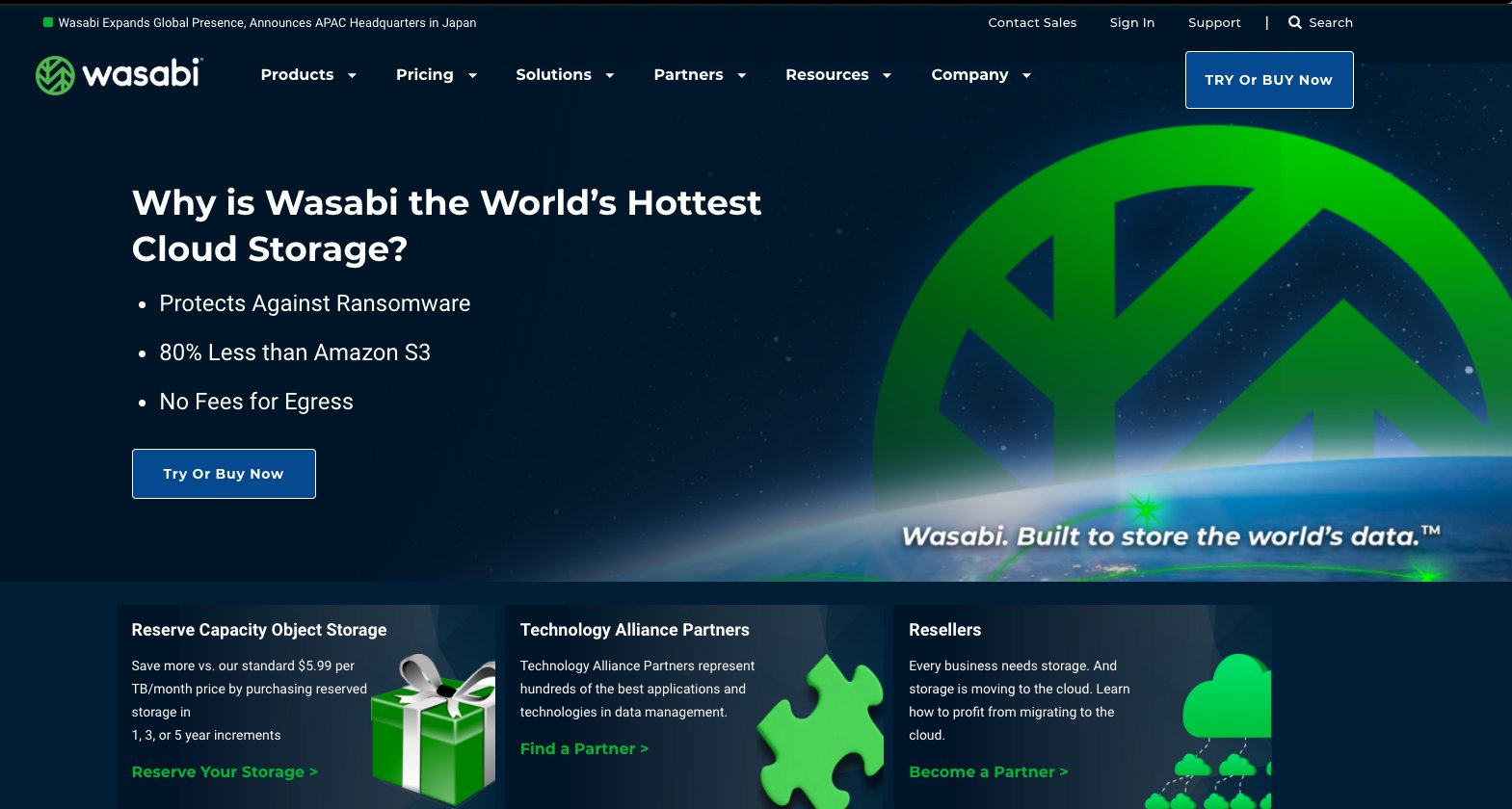
Before · WordPress
After · Storyblok
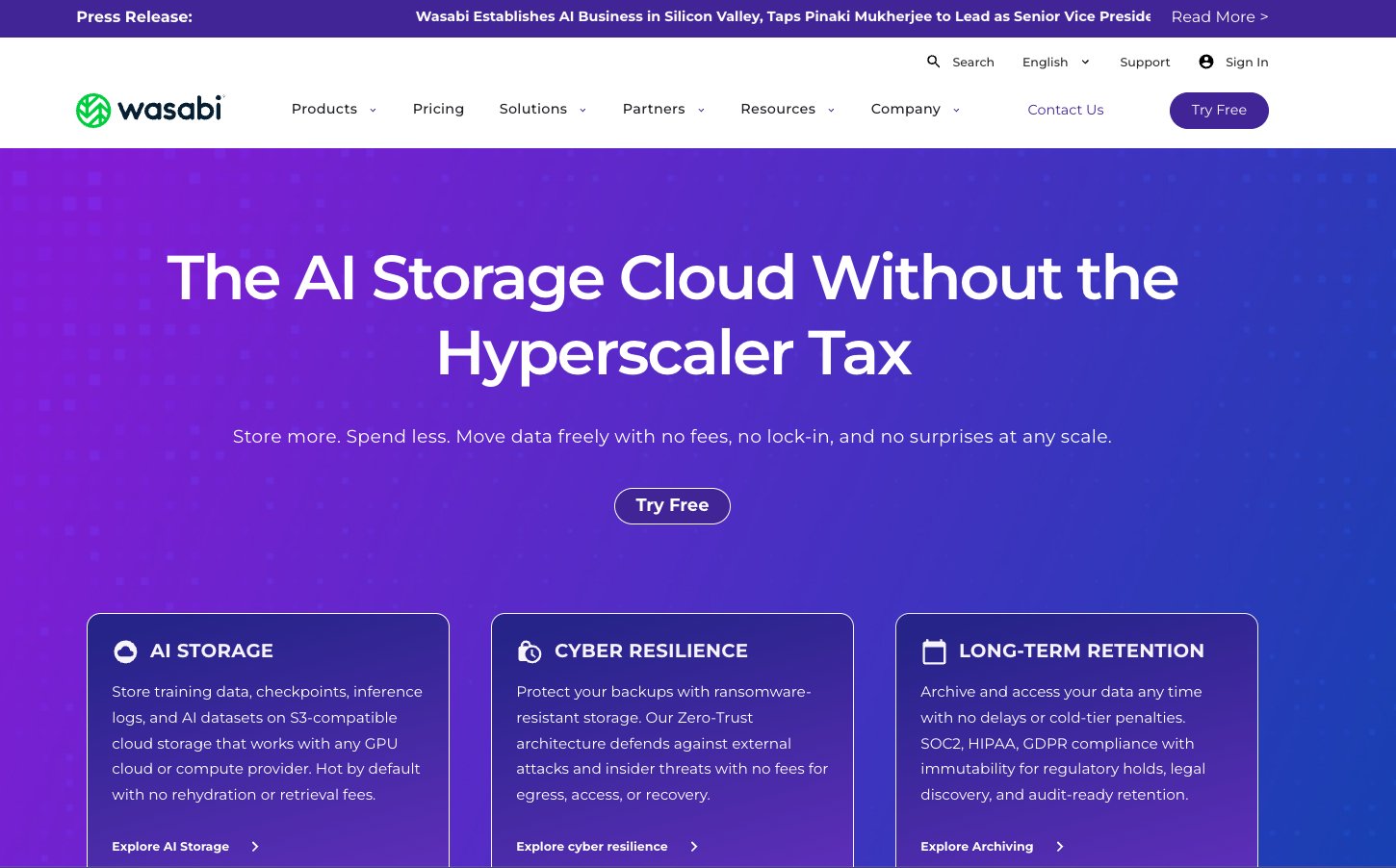
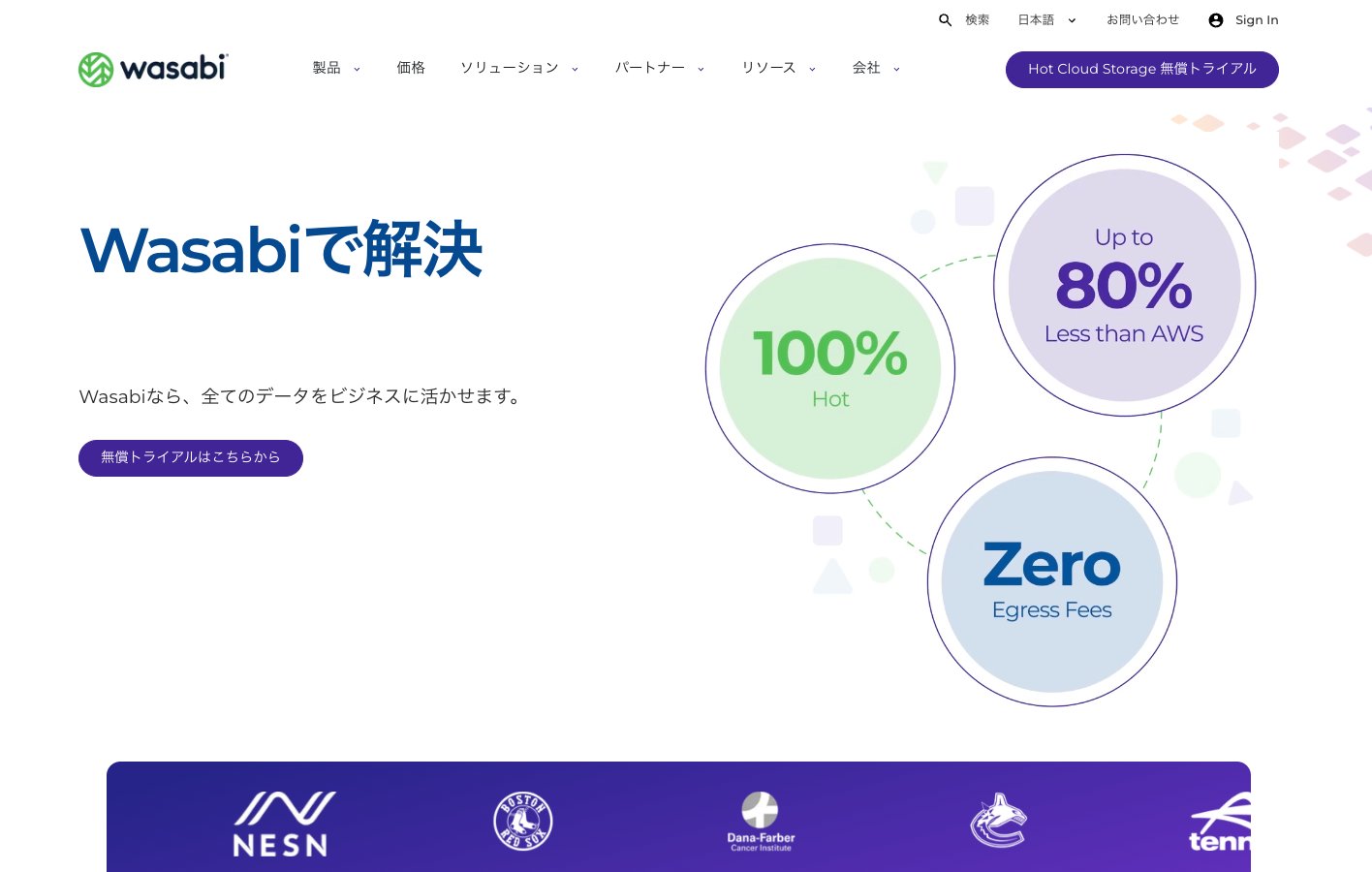
The old homepage, and wasabi.com today. The site has kept evolving since the November 2024 launch. Tap to enlarge.
Part 1
Plan
Know what every page is worth, decide what happens to it, and design the structure it moves into.
01 · The situation
The product grew up. The website didn’t.
Wasabi is a cloud storage company competing against some of the biggest names in tech. As it grew, its WordPress site started to look dated next to the services it was selling.
The fix was a rebrand and a move to Storyblok, a headless CMS. Headless means the content lives separately from the site’s design, so developers can build faster, more flexible pages.

02 · The problem
Protect the traffic you have. Go after the traffic you don’t.
Most of Wasabi’s organic traffic came from branded searches, people already looking for Wasabi by name. That traffic had to survive the move.
But branded search only grows as fast as the brand does. The new site also had to compete for non-branded searches: people looking for cloud storage who didn’t know Wasabi yet.
Goal 1 · Protect
Keep the branded traffic the old site had already won.
Goal 2 · Compete
Position the new site to win non-branded searches.
03 · The content catalogue
Every URL, with a price tag on it.
I crawled the old site with Screaming Frog to build a full content catalogue, then added the numbers that showed what each page was worth:
- Organic trafficVisits from unpaid search results.
- Direct trafficPeople going straight to the page.
- Leads generatedWhich pages actually produced business.
- Keyword portfolioWhich searches each page ranked for.
- Backlink portfolioWhich other sites linked to it.
Leads made this catalogue different from a standard SEO audit. A page with modest traffic that produced leads wasn’t expendable.
For a similar catalogue built around a brand name going away, see the content matrix from the Aramark → Vestis migration.
04 · Keep, kill, repurpose
A decision for every page.
- 01
Keep
It earns traffic or leads, and it moves over.
- 02
Kill
It doesn’t earn its place. It gets redirected to the closest relevant page.
- 03
Repurpose
The content is useful, but it needs a new shape or a new home.
The most important pages got extra protection. Their new versions had to match the old ones as closely as possible, 1:1, while still fitting the new design.
05 · Information architecture
Three doors in.
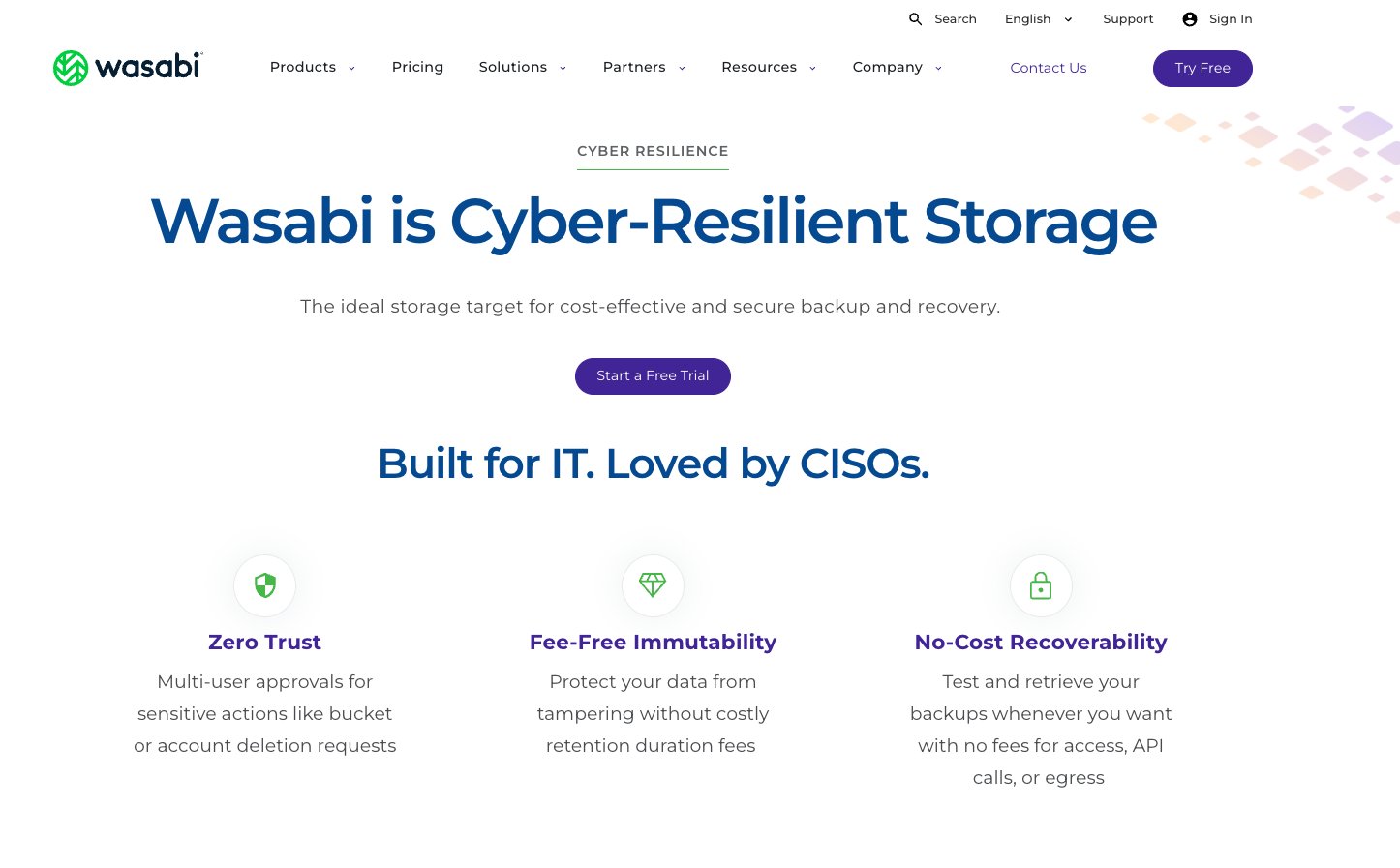
The new site was organized around three kinds of content:
Products
What Wasabi sells.
Solutions
The problems it solves, by use case.
Resources
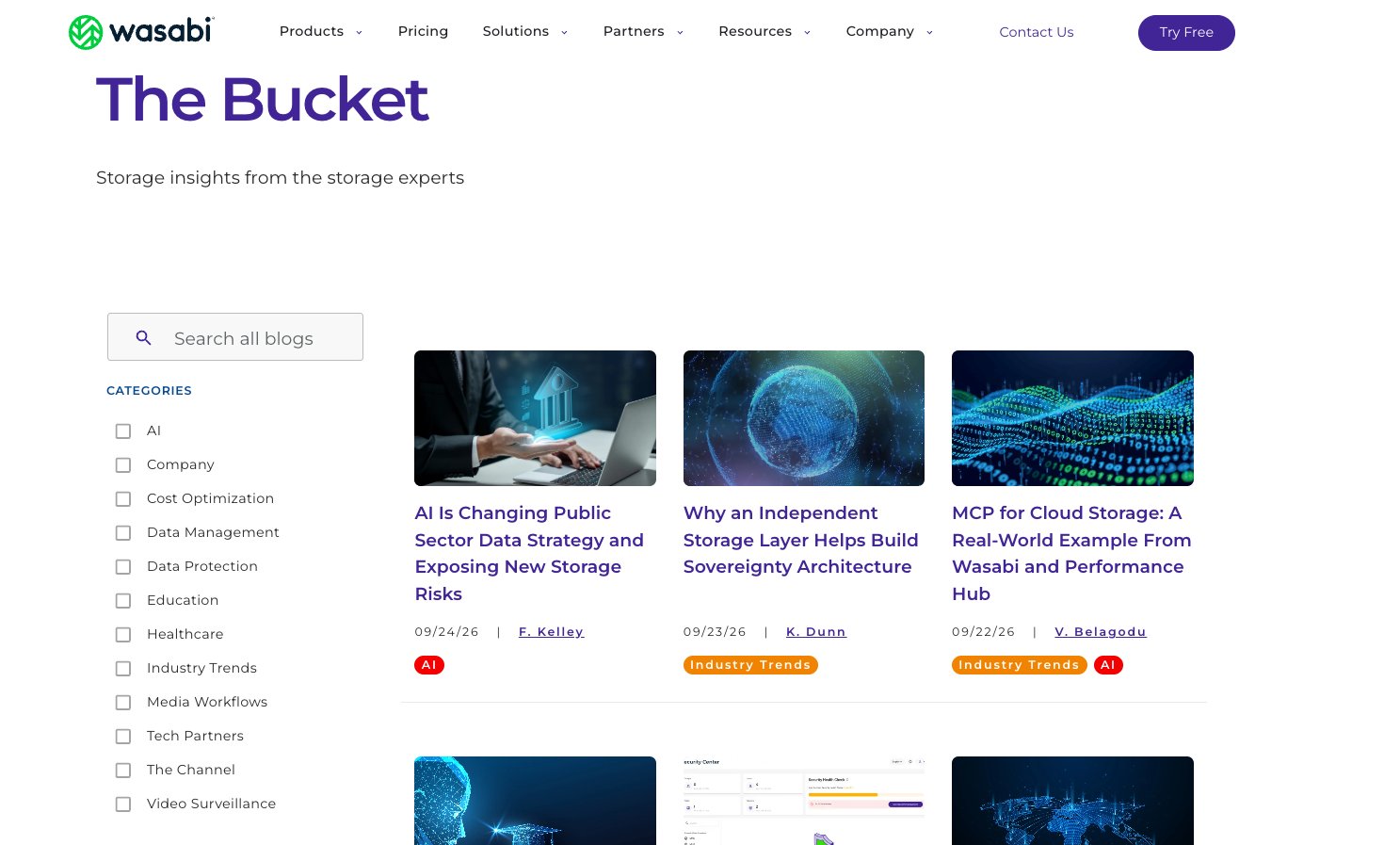
Blog posts, case studies and solution briefs.
Every section needed some mix of new content, repurposed content and new landing pages. Keyword research and search intent drove the structure and the URL patterns, so each section lined up with how people actually search.
The international sites got the same scrutiny. Six of the twelve localized subsites were single landing pages with no traffic and no search presence, so they were consolidated. The six that remained got hreflang tags, which tell Google which language and region version to show each searcher.
Part 2
Build
Write and move the content, map every old URL, and check the new site before anyone else sees it.
06 · Content
New pages, old equity.
With the IA set, the content work split three ways: writing new pages where there were gaps, repurposing existing content into its new home, and building landing pages around the non-branded searches the research had turned up.
Pages marked “keep” moved over with their content intact, so the rankings they’d earned had something to hold on to.
07 · The redirect map
Every old URL, one new address.
The redirect map was built from the planned IA, before a single page existed in Storyblok. Every old URL got a destination.
Priority pages from the catalogue got hand-picked 1:1 matches with their closest new equivalent, so the traffic, rankings and backlinks they’d earned went to a page that deserved them.
08 · Moving into Storyblok
Script what you can. Hand-build what matters.
The move from WordPress to Storyblok ran two ways, depending on the content. I worked with the developers throughout, mapping old content to new fields and reviewing pages as they were built.
Via API
Blog posts and other templated content: high-volume and consistent in structure.
Built by hand
The complex landing pages: they didn’t fit a template, and the redesign changed them the most.
09 · QA on the dev site
Find the problems before Google does.
Before launch, I went through the dev site looking for anything that would hurt users or rankings. Common migration problems include filter pages creating duplicate content, canonical tags pointing to the wrong place, and pages that looked right but read wrong to a crawler.
Then I crawled the dev site with Screaming Frog and compared it with the old site. For every high-priority page, the new title tags, headers and other on-page signals had to line up with what the old page had earned rankings for.
Part 3
Launch
Hand search engines a new map, flip the switch, and watch everything.
10 · Launch prep
Give Google a new map.
New XML sitemaps told search engines what pages existed on the new site. A new robots.txt told them what to crawl and what to skip. The hreflang setup was confirmed across the six international sites.
11 · Moving day
All hands on deck.
At launch, the whole team watched two things: redirects and traffic. We checked redirects on the live site, monitored traffic against the old baseline, and fixed problems as they appeared, not a week later in a report.
12 · Learnings
What I’d keep, and what I’d change.
- 1
Put leads in the catalogue
Traffic says what’s popular. Leads say what’s valuable. Adding leads changed which pages got protected.
- 2
Plan the IA before the redirects
A redirect map built on a finished structure has somewhere real to point.
- 3
Cut what isn’t working
Six international pages with no traffic weren’t an asset. Consolidating them made the remaining six stronger and easier to maintain.
- 4
Next time: automate the comparison crawls
The old-vs-new Screaming Frog comparison was a manual pass before launch. I’d set it up as a repeatable check that runs on a schedule, so on-page signals stay verified through launch and after, not just once.
Related SEO case study
Aramark → Vestis: rebranding without the brand.
A domain migration where the old brand name went away completely: a content matrix, a traffic forecast, 40 new content pieces and nearly 350 local landing pages.
Read the case study →
Related SEO case study
Qm Uniforms → Galls: fold in the brand, keep the products.
An ecommerce brand consolidation: a SKU-based 1:1 redirect map for 10,000+ products, aligned categories and on-page signals carried over.
Read the case study →
Replatforming? Don’t leave your rankings behind.
A new CMS is a chance to fix your structure, not just copy it. Let’s talk about doing it without losing the traffic you already earned.